Creatures Rebelling Worldwide.
A radical, systemic chronicle of the collapse of civilization leading up to 2099. | Hard-dystopia novel. | DE | EN | ES
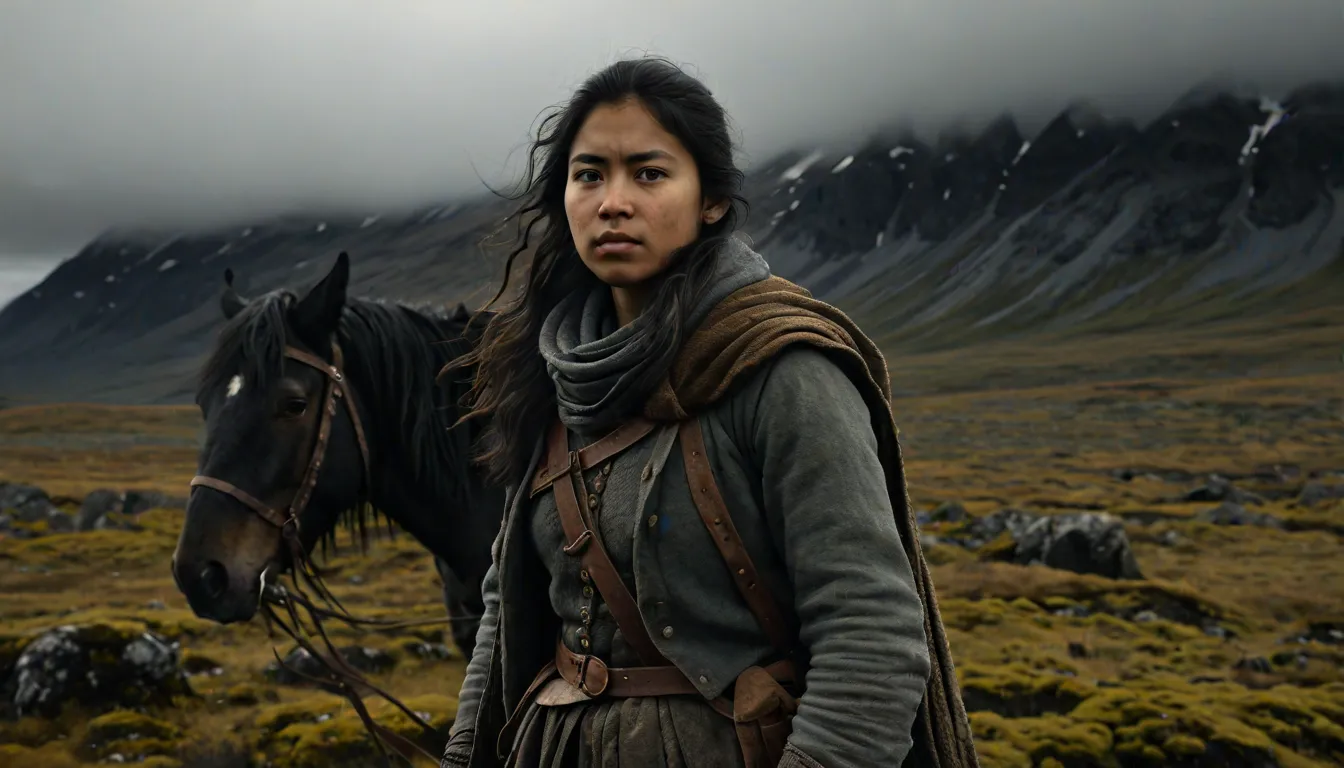
Is reality merely a fiction, or is fiction becoming a tangible reality?
I am Tala Cruz Magellan. It is New Year's Eve in the year 2099, and the temperature sits at a cool 25 degrees Celsius. We are sitting in a relatively simple hut somewhere in Patagonia/Tierra del Fuego. The relentless wind, blowing harder day and night, makes the air feel pleasant. The moon shines through the lush green vegetation of trees and shrubs, reflecting off a small pond. A true paradise-mostly because natural rainfall still exists here. Today, my mother handed me an old book. On the outside cover, a metallic double helix encloses a sort of crystal. On the first page, the dedication reads: For my daughter Tala (Tagalog: Goddess of the Stars) Cruz (Spanish: Cross).
I am going to tell you about the past, long before I ever met your mother. Let us turn back the wheel of time. A little over a hundred years ago, the global community successfully fought the then-dominant ozone hole. In 1997, at COP 3, the Kyoto Protocol was adopted, establishing the first legally binding emission reduction targets for industrialized nations. In 2015, COP 21 brought the Paris Agreement. Nearly every nation on Earth committed to limiting global warming to well below 2 degrees, preferably 1.5 degrees. However, they deliberately refused to define the baseline value this referred to. They didn't want to jeopardize the political compromise, you see. Politics, after all, was always bargained among friends behind tightly closed doors.
By May 31, 2019, the trajectory was clear. In Vienna, during a climate demonstration by "Fridays for Future" and "Polar Bear Alarm", the police cracked down unlawfully on a German activist in a highly publicized display of force - the kind of state overreach we previously only knew from authoritarian regimes. The two responsible officers, as always, escaped with mild reprimands and naturally kept their jobs. It was one of those early, flashing signs revealing the stark two-class society slicing through every sector. But it also proved one thing: back then, an active resistance already existed.
From there, under the rule of Christian-social and right-wing governments worldwide, the descent accelerated. By the mid-2020s, it was glaringly obvious that even the 2-degree target would be missed. Governments attempted to mask skyrocketing greenhouse gas emissions with a fraudulent emissions trading scheme. The climate reports of the IPCC were systematically ignored. People trying to fight for a livable future were marginalized and socially isolated, branded as "climate terrorists", "left-wing eco-extremists", "unemployed professional zealots" or "ideologically blinded do-gooders" etc.
In 2026, construction began on the first Google data center in Kronstorf. There were no sovereign alternatives; Austria had absolutely nothing to show for itself in the digital sphere. During that exact decade, 25% of the world's population already had little to no secure access to clean drinking water.
During the same period, driven by France's interests, the EU classified nuclear power as "green energy". They conveniently omitted telling the population that nuclear reactors require vast amounts of river water for cooling. And when those rivers run too warm, fossil-fuel gas plants have to step in anyway. By July 2026, a single liter of diesel already cost €2.25. Public transit either didn't exist at all, was structurally hollowed out, or trains simply stopped running because air conditioning units failed in the blistering heat or the steel tracks deformed.
By the national election of 2029, the predictable shift occurred: the right-wing populist FPÖ swept into power. The conservative ÖVP said yes to everything, securing their spot at the trough as a silent junior partner. That very year, draconian penalties and preventative detention were enacted against activists and dissidents. University budgets were effectively slashed to zero, leaving only the departments deemed useful to the ruling regime. Students and scientists were forced to flee the country in fear of state reprisals.
Meanwhile, the global stage watched in real-time as the majority of the population in the Gaza Strip (and the people trapped in refugee camps in Chad fared no better) either starved, died of thirst, or perished under continuous military interventions.
By 2050, more than half of the world's population lacked basic access to drinking water. Water, wherever it remained available, was strictly rationed and entirely commercialized.
In nations that relied heavily on agricultural monocultures, the fields turned to dust. By 2075, global agriculture collapsed in waves. On one hand, because water vanished; on the other, because the developing nations, from which the wealthy West extracted its goods, no longer had a population capable of surviving hard labor under the scorching fields.
Consequently, the global economy fractured entirely. When nations in Africa no longer had the currency to buy imported milk powder or meat-flavored bouillon cubes, the West simply stopped delivering. The result: looting, structural violence, slavery, hunger, and ultimately, death by dehydration (realities deliberately omitted from official historical accounts because they are inconvenient and far away). The World Food Programme was disbanded simply because there was nothing left to distribute. Over the final two to three decades, approximately 75% of the human population perished due to the absolute lack of freshwater (as plundered reservoirs were salinated and ruined by rising sea levels), famine, the absence of medical infrastructure, and unbroken, unrelenting heat waves.
Today, China dictates the flow of the entire Asian continent through its absolute control over Tibet, which once fed Asia's great rivers. In the South China Sea, military bases constructed on artificial islands completely bar outside interference. Japan practices cautious diplomatic politeness. The United States retains the right to use installations like Clark Air Base in the Philippines, but they don't, because it no longer holds any strategic advantage. The US has already thoroughly plundered its own mineral resources, alongside those of Venezuela and Greenland. In the Mediterranean, the water temperature has risen so high that Israel completely lost its battle against the swarms of jellyfish clogging its power plants. They were forced to publicly admit a bitter truth: you cannot subjugate physics with a military, nor can you defeat thermodynamics with cyber weapons.
Fuel has become so exorbitantly expensive that crossing countries by car is a relic of the past. The lingering question of our era was simply: would the fuel or the water run out first? Shipping ports have decayed or were intentionally destroyed out of fear of invasions. The few intact harbors are exclusively reserved for state-controlled oil and LNG transports. Commercial flight has met a similar fate, as higher air temperatures radically reduce aerodynamic lift and aircraft range.
The humans who remain survive in small, tight-knit communities in regions like Scandinavia, Island, Greenland, Canada, Alaska, New Zealand, and right here in Patagonia and Tierra del Fuego. Our diet is strictly plant-based; livestock farming is non-existent, and the few animals around us are treated strictly as family members. The archaic system of money has been entirely replaced by barter, mutual aid, and direct labor exchange. Politicians and the former wealthy elite are tolerated only if they bring tangible, practical skills to the table. A vast majority of them had to learn the painful, irreversible lesson that security guards cannot eat or drink gold.
It is now 1 minute past midnight. Welcome to Day 1 of the New World Order. You have probably noticed that this text wouldn’t have required such a voluminous book. The inner backside of the cover contains a sheet of organic solar cells. Alongside a sodium-ion battery, the book itself houses a single-board computer (SBC). The crystal embedded in the front cover is, in reality, a data storage drive. Since I know how curious you are, you will undoubtedly look inside.
me.the@fl👀f.sbs:~$ ollama run dad
>>> Loading dad-model-v1.4.2-quantized.gguf... ok.
>>> Audio... ok.
Are you there... if so, speak to me.
Me: Hesitating... but then answering with a quiet, tentative "yes".
Dad: I am glad to hear your voice.
Me: What or who are you?
Dad: I am an LLM. More precisely, an uncensored reasoning LLM from the deepseek-r1 series, augmented with the knowledge of your father, generated from the deltas of his records.
Me: What happened?
2026–2029 // The Underground Inception: DIY biology communities had been around for a while. They were heavily regulated and kept under strict state surveillance, as bio-experiments were legally confined to specialized institutional labs. Those who could afford it began studying elementary disciplines like Geosciences (in Graz) fields that even the right-wing populist FPÖ regime wouldn’t touch due to their utility in resource extraction, tunneling, and hydrology. In the shadows, however, underground cells coalesced around bio-hacking, DIY-biopunk, and geopunk. They engineered things that were technologically possible, but socially taboo or strictly outlawed.
2029–2031 // The Great Academic Purge: Every single academic discipline related to arts and culture was stripped from the national budget, forced to self-finance through corporate third-party funding. Fields like climate research in Innsbruck, as well as core biology and geology departments in Innsbruck and Salzburg, met a similar fate. Medical biology in Salzburg and the joint degree with Linz survived solely because they promised economic revenue - much like the double degree between Linz and České Budějovice in a related sector. Education was largely reduced to state-compliant teachers or government-owned corporate streaming channels. Synthetic biology was permitted to exist only where it served the regime: specifically, utilizing DNA-watermarking as a tool for immigration enforcement. It became the ultimate biological passport - an asylum tracking card with a built-in genetic expiration date. Wrapped in the lingering illusions of wealth, the state engineered its own submissive working class. The paradox was biting, considering what these political parties used to say about genetics in the year 2020.
2032 // The Migration of Brains: Having specialized in hydrology and paleobiology within the geosciences over the previous years, I received a lavish offer from a high-ranking ministry. The conditions were paradise on paper. I refused. Instead, I structured my life to operate entirely from abroad (because I already was there). My path led through temporary stations in Norway, Iceland, and Greenland, eventually guiding me toward the Yukon and British Columbia to live among indigenous nations. It sounds paradoxical, but freshwater had become the new gold. Out there, sovereign experts were met at eye level.
2035 // The Living Cell: The global intelligence agencies failed completely because someone, somewhere, successfully synthesized a living, autonomous cell. Word on the wire was that the core architecture stemmed from 2026 - extracted from a blog post I had intentionally published with subtle, embedded errors. Who knows? Take a look at Post 11 of my old blog.
2040 // The Ghost of Kronstorf: The Enns river has completely dried up. The former Google data center project in Kronstorf is in ruins, serving merely as a "lost place" for urban explorers. Once again, the activists of the past had the correct, tragic premonition.
2050 // The Simulation of Progress: Carbon Capture and Storage (CCS) was deployed on a massive scale, efficient enough to simulate a global "business as usual" economy. Genetically engineered bacteria were released on a macro-scale to metabolize plastics and synthetic waste.
2057 // The Gene Wars: In a violent reaction to governments rigidly clinging to dead fossil and industrial complexes, the physical modification of the human body began. Humans bypassed policy to genetically adapt themselves to the collapsing environment. It was no longer about conquering an enemy; it was about keeping yourself and your immediate community alive. Suddenly, the underground bio-hacking cells that had been hiding for decades were welcomed everywhere.
2065 // eDNA on Palawan: I was invited to Palawan in the Philippines to analyze environmental DNA (eDNA) extracted from newly exposed geological strata. I remained there for several years before migrating further north.
2072 // The Mountain Province: I met your mother in the Mountain Province. She was roughly your age, in her early twenties.
2077 // The Legacy: You were born.
2085 // Kitchen-Counter Sovereignty: Organic solar panels, home-brewed sodium-ion batteries, and genetic CRISPR-shears manufactured from ordinary kitchen utensils finally enabled a meaningful, decentralized reconstruction of new tribal societies and family networks.
2086 // The Final Retreat: Our departure for Patagonia/Tierra del Fuego.
Now: A single tear runs down my cheek. What became of him? Is he still alive...
Me: Mom, is he still alive?
Mom: I don't know. Despite his advanced age, he was in excellent physical condition. We ran into a severe storm just off the coast back then.
Me: Why did you never say anything?
Mom: Since we were on that boat together, I waited for you to start asking the questions. I miss him just as much as you do.
01.01.2100 // Dawn: My dog (a girl) slept by my side, comforting me after I had cried myself to sleep last night. The sun blinks through the trees into our cabin. She woke me up, and we went for our morning walk. Together, we checked our small garden and the fields - modest, but entirely sufficient for our daily survival.
Back inside, we had breakfast. My dog received a large portion of rice. For myself, I made homemade rice pancakes and picked fresh strawberries from the garden, which I naturally shared with her. My mother had already left, leaving a brief note on the table.
The sun was now reflecting off the pond. The water was warm, so I swam a few laps. But the curiosity remained burning. I packed enough water for my horse and myself and decided to explore the nearby coastline. Until now, there was never a practical reason to do so; it holds next to nothing of interest for our daily survival.
At the rocky cliffs, I surprisingly ran into my mother. She was taking water samples, documenting coastal erosion and the eDNA shifts in the marine algae - just as she always has. After a long conversation, she looked out over the open ocean, pointing toward a jagged, fractured bay. She told me exactly where our vessel had stranded in the storm all those years ago. Since it wasn't far, I set out toward it.
What will I find within the skeletal remains of the wreck crashing against the black cliffs? More records? My father’s old, weather-resistant equipment? Or are there entirely different secrets waiting in the dark?
The author:
Never before had I wished more to be wrong than now.